

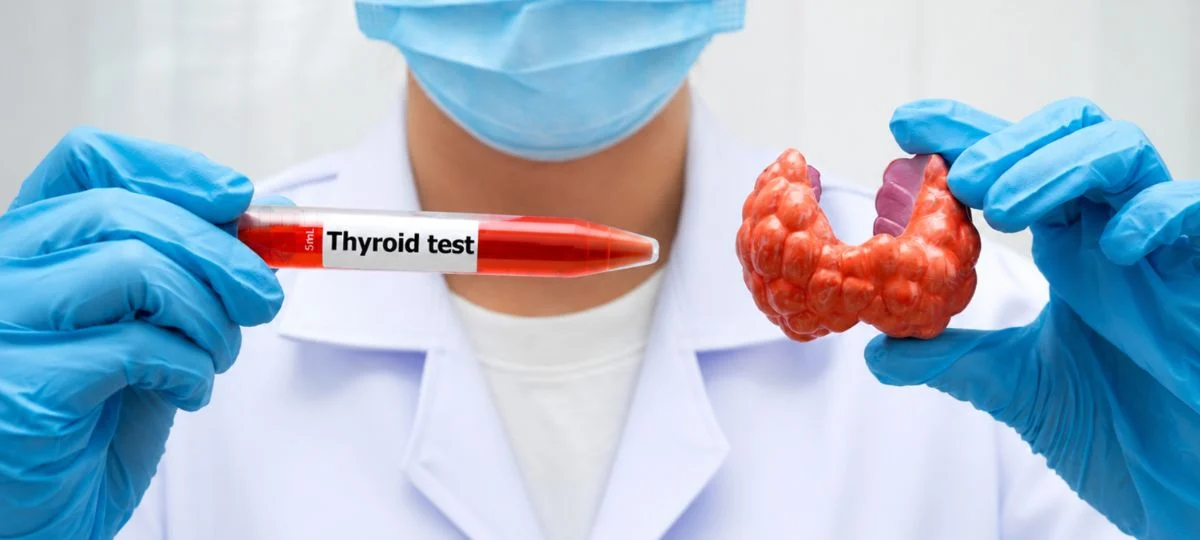
A thyroid blood test helps check how well your thyroid gland is working. The thyroid plays a key role in controlling metabolism, energy, and hormone balance. Understanding your thyroid blood test results can help detect conditions early and guide proper treatment.
What Is Thyroid Gland?
The thyroid gland is a small, butterfly-shaped gland located in the front of your neck. It produces hormones that regulate many functions in your body, including metabolism, heart rate, and body temperature.
How Does the Thyroid Gland Function?
The thyroid gland releases hormones called T3 (triiodothyronine) and T4 (thyroxine). These hormones control how your body uses energy. The pituitary gland produces thyroid-stimulating hormone (TSH), which tells the thyroid how much hormone to produce.
If this system is unbalanced, it can lead to thyroid disorders such as hypothyroidism (low thyroid activity) or hyperthyroidism (overactive thyroid).
What Are Thyroid Tests?
A thyroid blood test is used to measure hormone levels in your blood and check how well your thyroid gland is working. The thyroid is a small, butterfly-shaped gland in your neck that plays a big role in controlling your metabolism, energy levels, body temperature, and even your mood.
These tests are important because thyroid problems often develop slowly. In many cases, people may not notice symptoms right away. A blood test can help detect changes early, sometimes even before any signs appear. Early detection allows for faster treatment and helps prevent complications.
Types of Thyroid Tests
There are several types of thyroid tests, and each one provides different information about your thyroid function. Doctors may request one or a combination of these tests depending on your symptoms and health history.
TSH (Thyroid-Stimulating Hormone)
This is the most commonly used thyroid test. It measures the level of TSH in your blood, a hormone produced by the pituitary gland that tells your thyroid how much hormone to make.
- High TSH levels may indicate an underactive thyroid (hypothyroidism)
- Low TSH levels may suggest an overactive thyroid (hyperthyroidism)
Free T4 (Free Thyroxine)
This test measures the level of thyroxine (T4) that is available for your body to use. T4 is the main hormone produced by the thyroid.
- Low Free T4 may point to hypothyroidism
- High Free T4 may indicate hyperthyroidism
Free T3 (Free Triiodothyronine)
This test measures triiodothyronine (T3), the active form of thyroid hormone that affects how your body uses energy. It is often used when hyperthyroidism is suspected.
- High T3 levels are commonly linked to an overactive thyroid
Thyroid Antibody Tests
These tests check for antibodies in the blood that may attack the thyroid. They help diagnose autoimmune thyroid conditions, such as:
- Hashimoto’s thyroiditis (a common cause of hypothyroidism)
- Graves’ disease (a common cause of hyperthyroidism)
Thyroid Tests in a General Blood Panel
Thyroid tests are not always included in a standard blood test. However, they can be added as part of a more comprehensive health screening if requested by your doctor.
A full thyroid panel may be recommended if you have symptoms such as fatigue, weight changes, hair thinning, irregular heartbeat, or mood changes. It may also be advised if you have a family history of thyroid disease or other autoimmune conditions.
Why Thyroid Testing Matters
Keeping your thyroid hormones in balance is essential for overall health. When levels are too high or too low, it can affect many systems in your body, including your heart, brain, and metabolism.
Regular thyroid testing helps:
- Detect problems early
- Monitor existing thyroid conditions
- Guide proper treatment and medication adjustments
How Do Thyroid Blood Tests Work?
A thyroid blood test involves taking a small sample of blood from a vein. The sample is analyzed to measure hormone levels and identify any imbalance.
How to Prepare for Your Thyroid Blood Test
Most thyroid tests do not require strict preparation, but some guidelines help ensure accurate results.
Many people ask: do I need to fast for a thyroid blood test? In most cases, fasting is not required. However, your doctor may advise fasting if other tests are done at the same time.
Common preparation questions include:
- Thyroid blood test fasting: Usually not required
- How long to fast before thyroid blood test: Only if instructed, typically 8–12 hours
- Can I drink water before a thyroid blood test? Yes, water is allowed
- Can I drink tea before thyroid blood test? It is best to avoid tea before testing
- Can you drink coffee before a thyroid blood test? Avoid coffee as it may affect results
Always follow your healthcare provider’s instructions for best accuracy.
What to Expect During Your Thyroid Blood Test
The procedure is quick and simple. A healthcare provider will clean your arm, insert a small needle, and collect a blood sample. You may feel a slight pinch, but the process usually takes only a few minutes.
What to Expect After Your Thyroid Blood Test
After the test, you can return to your normal activities. Mild bruising or soreness at the injection site is normal. Results are usually available within a few days.
How Do Thyroid Imaging Tests Work?
In some cases, doctors may recommend imaging tests such as ultrasound or scans to examine the thyroid gland’s structure. These tests help detect nodules, enlargement, or abnormalities.
How to Prepare for Your Thyroid Imaging Test
Preparation depends on the type of imaging. Most ultrasound tests do not require special preparation, but you should follow any instructions given by your doctor.
What to Expect After Your Thyroid Imaging Test
Imaging tests are non-invasive and do not require recovery time. Results are reviewed alongside your thyroid blood test results for a complete diagnosis.
Results and Follow-Up
Understanding your thyroid blood test levels is important for proper diagnosis. Each hormone has a normal range, and values outside this range may indicate a problem.
- High thyroid blood test (high TSH): May indicate hypothyroidism
- Low thyroid blood test (low TSH): May indicate hyperthyroidism
A thyroid blood test normal range depends on the lab, but TSH is typically between 0.4 and 4.0 mIU/L.
Doctors interpret results based on symptoms, medical history, and other tests. Follow-up may include repeat testing, medication, or lifestyle adjustments.
FAQs:
What imaging tests do doctors use to diagnose and find the cause of thyroid disease?
Doctors may use imaging tests to examine the size, shape, and structure of the thyroid gland. Common options include:
- Ultrasound – the most widely used test, which uses sound waves to create images of the thyroid and detect nodules or swelling
- CT scans – provide detailed cross-sectional images, usually used in more complex cases
- Radioactive iodine scans – show how the thyroid absorbs iodine, helping doctors understand how well it is functioning
These tests help identify abnormalities and determine the underlying cause of thyroid problems.
What tests do doctors use if I have a thyroid nodule?
If a thyroid nodule is found, doctors will usually recommend further testing to determine if it is harmless (benign) or needs treatment. These tests may include:
- Ultrasound to assess the size, shape, and characteristics of the nodule
- Fine needle aspiration (biopsy) to collect a small sample of cells for laboratory testing
- Thyroid blood tests to check hormone levels and overall thyroid function
Most thyroid nodules are non-cancerous, but testing is important to rule out serious conditions.
What blood tests show thyroid function?
Several blood tests are used to evaluate how well your thyroid is working. The most common include:
- TSH (Thyroid-Stimulating Hormone) – the primary test used to assess thyroid function
- Free T4 (Thyroxine) – measures the main hormone produced by the thyroid
- Free T3 (Triiodothyronine) – measures the active hormone that affects metabolism
- Thyroid antibody tests – help detect autoimmune thyroid conditions
Together, these tests provide a complete picture of your thyroid health.
What is included in a full thyroid panel?
A full thyroid panel typically includes several tests to give a more detailed evaluation of thyroid function. These usually include:
- TSH
- Free T4
- Free T3
- Thyroid antibody tests (in some cases)
Doctors may adjust the panel based on your symptoms, medical history, or initial test results.
What happens if my TSH level is high?
A high TSH level usually means the thyroid is underactive, a condition known as hypothyroidism. This happens when the thyroid does not produce enough hormones, so the body signals it to work harder.
Common symptoms may include fatigue, weight gain, dry skin, and sensitivity to cold. Treatment often involves thyroid hormone replacement therapy, which helps restore normal hormone levels and relieve symptoms.
What can affect thyroid test results?
Several factors can influence thyroid test results, which is why doctors consider your overall health when interpreting them. These factors include:
- Certain medications (such as hormone treatments or steroids)
- Recent illness or infection
- Pregnancy or hormonal changes
- High levels of stress
- Diet, especially iodine intake
- Time of day when the test is taken
Because of these variables, results are best evaluated alongside your symptoms and medical history.
Do you have to fast for a thyroid test?
In most cases, fasting is not required for a thyroid blood test. However, if your test is part of a broader health screening that includes other blood tests (such as cholesterol or glucose), your doctor may ask you to fast.
It is always best to follow your healthcare provider’s instructions to ensure accurate results.
Conclusion
A thyroid blood test is a simple and effective way to check your thyroid health. It helps detect hormone imbalances, diagnose thyroid conditions, and guide treatment. Understanding your test results and preparation steps ensures accurate results and better health outcomes.
Key Summary
- A thyroid blood test measures hormone levels to assess thyroid function
- TSH, T3, and T4 are key indicators of thyroid health
- Fasting is usually not required for thyroid testing
- High or low results may indicate thyroid disorders
- Regular testing helps detect problems early
- Imaging tests may be used alongside blood tests for diagnosis